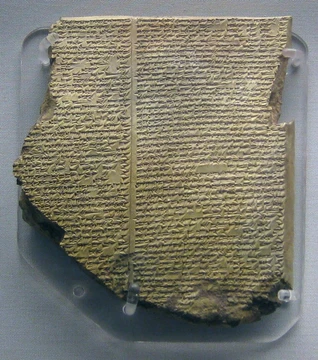
Layamon's Brut
Middle English alliterative poem recounting Britain's mythical history.

Layamon's Brut (c. Layamon's version is longer than both and includes an enlarged section on King Arthur.
- type
- Poem
- author
- Layamon (English priest)
- language
- Middle English
- known_for
- First English history since the Anglo-Saxon Chronicle; enlarged section on King
Lore & Background
Layamon's poem is longer than both and includes an enlarged section on the life and exploits of King Arthur. It is written in the alliterative verse style commonly used in Middle English poetry by rhyming chroniclers, the two halves of the alliterative lines being often linked by rhyme as well as by alliteration.
Reader's Guide
Its deliberate use of archaic Anglo-Saxon vocabulary and alliterative style reflects Layamon's interest in preserving Old English conventions. The poem is now regarded as valueless as history, but it remains one of the best extant examples of early Middle English. Several original passages suggest Layamon was interested in carving out the history of the Britons as the people 'who first possessed the land of the English'.
Did You Know?
- It was the first work of history written in English since the Anglo-Saxon Chronicle.
- The poem includes an enlarged section on the life and exploits of King Arthur.
- Layamon's Brut is based on the Anglo-Norman French *Roman de Brut* by Wace.
More in Poetry Collections And Epic Poems 1-22
Related in Poetry Collections And Epic Poems
Links follow this subject's own source article.
Spotted an error? Know more?
This is a living reference — every entry is fact-audited, and reader corrections feed straight into our audit queue. Suggest an edit · See this site's audit record